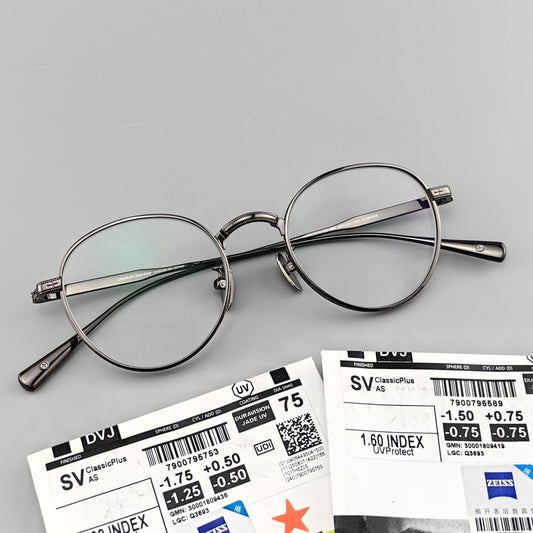
Case Study: Singapore Meets Kyoto — The Art of Weightless Acetate Glasses

When it comes to eyewear, not all frames are created equal. Some are functional, some fashionable — and then there are designs that transcend both, becoming true works of wearable art. This custom build for a discerning client from Singapore perfectly captures that spirit, uniting Japanese craftsmanship with everyday practicality.
The star of the project? A pair of Taihachiro Japanese handmade acetate glasses in a delicate mint transparency — proof that designer acetate glasses can be light, strong, and unmistakably stylish all at once.
Why This Client Chose Acetate Over Metal
While titanium and rimless frames dominate conversations around lightweight eyewear, acetate remains the classic choice for those who want both color personality and structural balance. Our Singaporean client, with a -3.00 prescription, was drawn to the airy mint hue of the Candy Color Frames, knowing they would complement both casual and professional outfits.
At just 17 grams total weight, the frame feels almost featherless on the face, yet offers durability and strength unmatched by typical plastic frames.

The Craft: Tradition Meets Precision
True to Kyoto’s reputation for meticulous artistry, these frames were crafted with methods few workshops still practice today:
-
20+ acetate layers fused together using traditional lamination techniques for depth and durability.
-
Hand-polished edges for glass-like clarity that reflects light with subtle sophistication.
-
Seamless spring temples with no screws or hinges — a testament to precision engineering that ensures comfort and longevity.
The result is eyewear that doesn’t just fit; it adapts to your lifestyle, almost disappearing when worn.

Functionality: Prescription Strength Meets Comfort
High prescriptions can often make frames feel heavy or unbalanced, but here the 54mm lenses were optimized for thinness while maintaining stability in the fullrim design.
-
Even at -3.00 prescription strength, the glasses remain slim and elegant.
-
Weight distribution ensures no pressure points, even after a full day of wear.
-
The frame’s construction minimizes lens edge thickness — essential for both comfort and aesthetics.
For men, this makes them a solid choice for fullrim glasses for men who want a balance between professional structure and modern flair.

The Style Factor: Candy Color Frames Done Right
Not all Candy Color Frames are created equal. Some can feel too playful, but these mint-transparent frames embody the Japanese concept of understated elegance. The translucent tone catches sunlight during the day, yet remains sophisticated enough for evening wear.
It’s a style that shifts seamlessly — from boardroom presentations to weekend coffee shops. That versatility is why acetate remains the foundation of many designer acetate glasses collections.

Client Testimonial: Featherweight Art
When the client tried them on for the first time, their reaction was simple but telling:
“Wears like featherweight art — I forget they’re glasses.”
And that’s exactly the point: when design, comfort, and craftsmanship align, eyewear becomes more than a necessity — it becomes self-expression.

Explore More
Interested in this exact model? See the product here: 👉 Acetate Glasses
Looking for other options? Browse our full collection: 👉 Fullrim Glasses