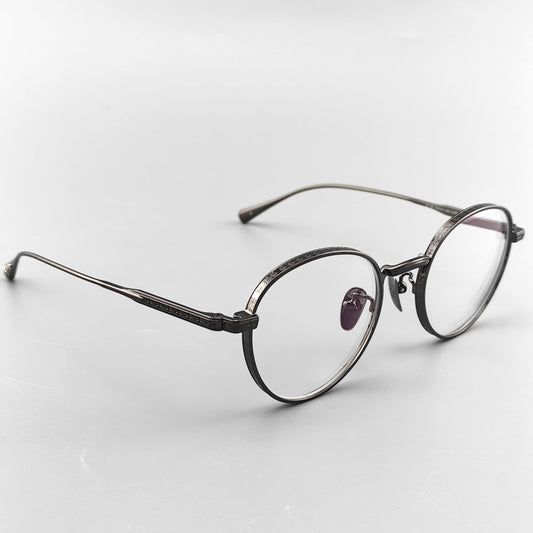
Myopia vs Hyperopia Lenses: What Happens When You Use the Same Frame? (Real -6.00 vs +5.50 Comparison)
Introduction
When choosing eyeglasses, most people focus on style—but the lens structure is what truly determines comfort, appearance, and weight.
In this article, we’ll walk you through a real-world comparison:
- Same frame
- Two different prescriptions
- Completely different results
This case clearly shows the difference between myopia (nearsighted) and hyperopia (farsighted) lenses—and how to choose the right frame for your prescription.
Real Case: Same Frame, Opposite Prescriptions
We used the exact same frame for two customers:
- Lens Width: 52mm
- Lens Height: 48mm
Prescription Details
| Customer | Vision Type | Prescription |
|---|---|---|
| A | Myopia (Nearsighted) | -6.00D |
| B | Hyperopia (Farsighted) | +5.50D |


What’s the Difference? (Visual Comparison)
Even though the frame is identical, the final glasses look and feel very different.
Myopia Lenses (-6.00D)
- Thin in the center, thick at the edges
- Noticeable edge thickness from the side
- Slight “minification” effect (eyes may appear smaller)

Hyperopia Lenses (+5.50D)
- Thick in the center, thinner at the edges
- More weight concentrated in the middle
- “Magnification” effect (eyes may appear larger)

Side-by-Side Comparison
| Feature | Myopia Lens | Hyperopia Lens |
|---|---|---|
| Thickness | Edge-heavy | Center-heavy |
| Visual Effect | Eyes look smaller | Eyes look larger |
| Weight Distribution | Outer edges | Lens center |

Why Does This Happen? (Simple Explanation)
The difference comes from how lenses bend light:
Myopia (Concave Lens)
- Spreads light outward
- Reduces focus strength
- Results in thicker edges
Hyperopia (Convex Lens)
- Converges light inward
- Increases focus strength
- Results in thicker center

Pros and Cons After Wearing
Myopia Lenses
Pros
- More natural facial appearance
- Less central distortion
Cons
- Thick edges at high prescriptions
- Heavier overall lens weight
Hyperopia Lenses
Pros
- Thinner edges (cleaner frame outline)
- Better edge aesthetics
Cons
- Thick center
- Noticeable magnification effect
How to Choose Lenses Based on Prescription
Low Prescription (±2.00D or below)
- Almost any frame works
- Focus on style and comfort
Moderate Prescription (±2.00 to ±5.00D)
- Choose smaller frames
- Consider high-index lenses
- Avoid overly wide designs
High Prescription (±5.00D and above)
This is where frame choice becomes critical.
Key recommendations:
- Keep lens width 52mm or smaller
- Choose high-index lenses (1.67 / 1.74)
- Prioritize balanced weight distribution

Frame Shape Guide for High Prescriptions
This is one of the most overlooked factors.
Square Frames (Narrow Frame Type)
- Choose shorter height designs
- Keep width ≤ 52mm
- Helps reduce edge thickness


Round Frames
- Best for high prescriptions
- Even thickness distribution
- Visually more balanced

Polygonal / Oversized Frames
- ❌ Not recommended
- Causes uneven thickness buildup
- Makes lenses look heavier


Important Tip: Weight Balance Matters More Than Frame Weight
Many customers try to choose ultra-light frames, but that can backfire.
If the lenses are heavy:
- The glasses will tilt forward
- Pressure increases on the nose
- Wearing comfort decreases
Better approach:
Choose a well-balanced frame + optimized lens size
Final Thoughts
This comparison clearly shows:
- Same frame ≠ same result
- Lens type changes everything
- Frame size and shape are critical for high prescriptions
If you have a strong prescription (myopia or hyperopia),
choosing the right frame is just as important as choosing the right lenses.